

DNS records tell the internet where your website and email live. With our default settings, we create and update them for you. Want to change them yourself? Here's how.
Change your DNS records
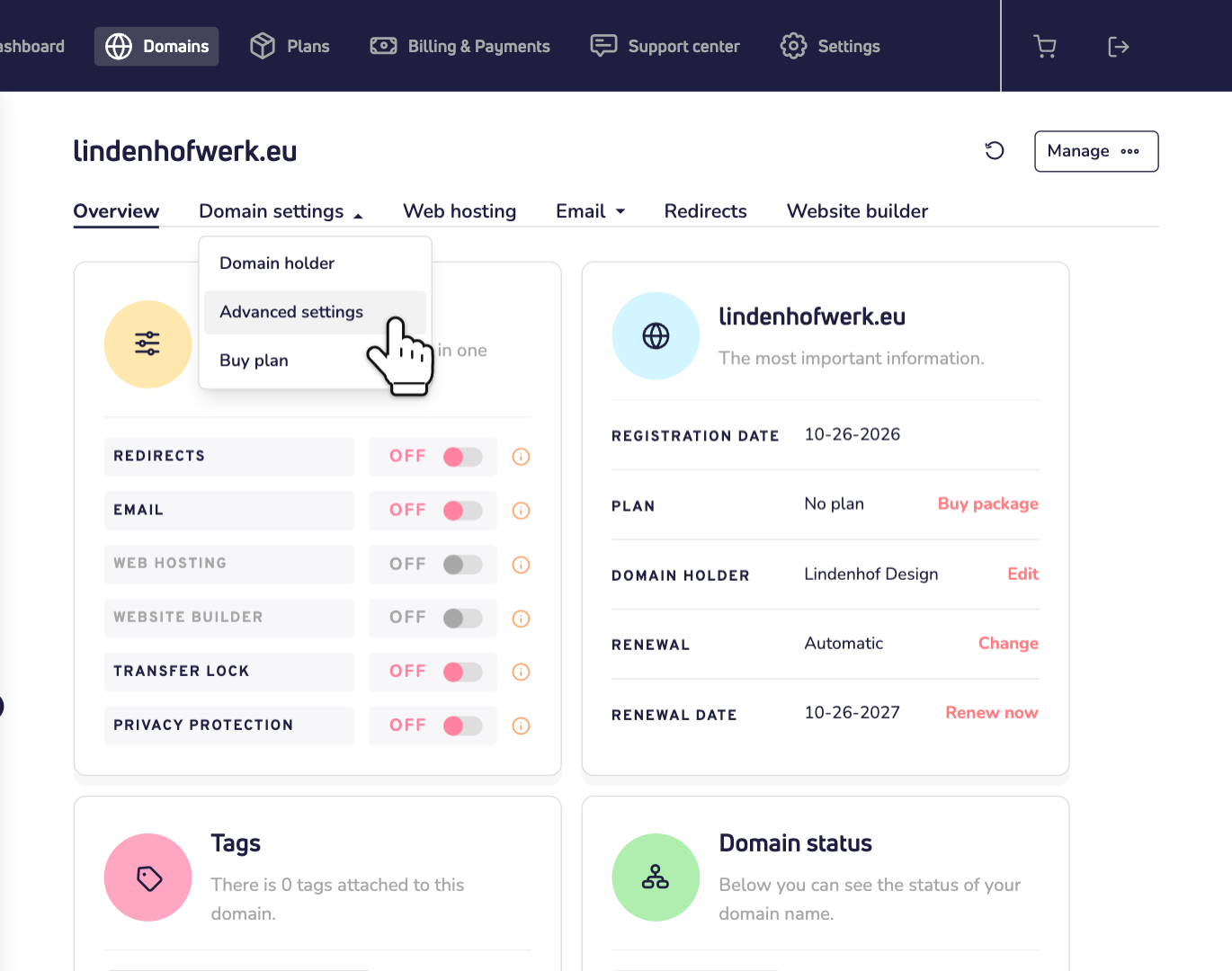
Step 1: Open your domain name in your dashboard. Click Domain settings, then Advanced settings.
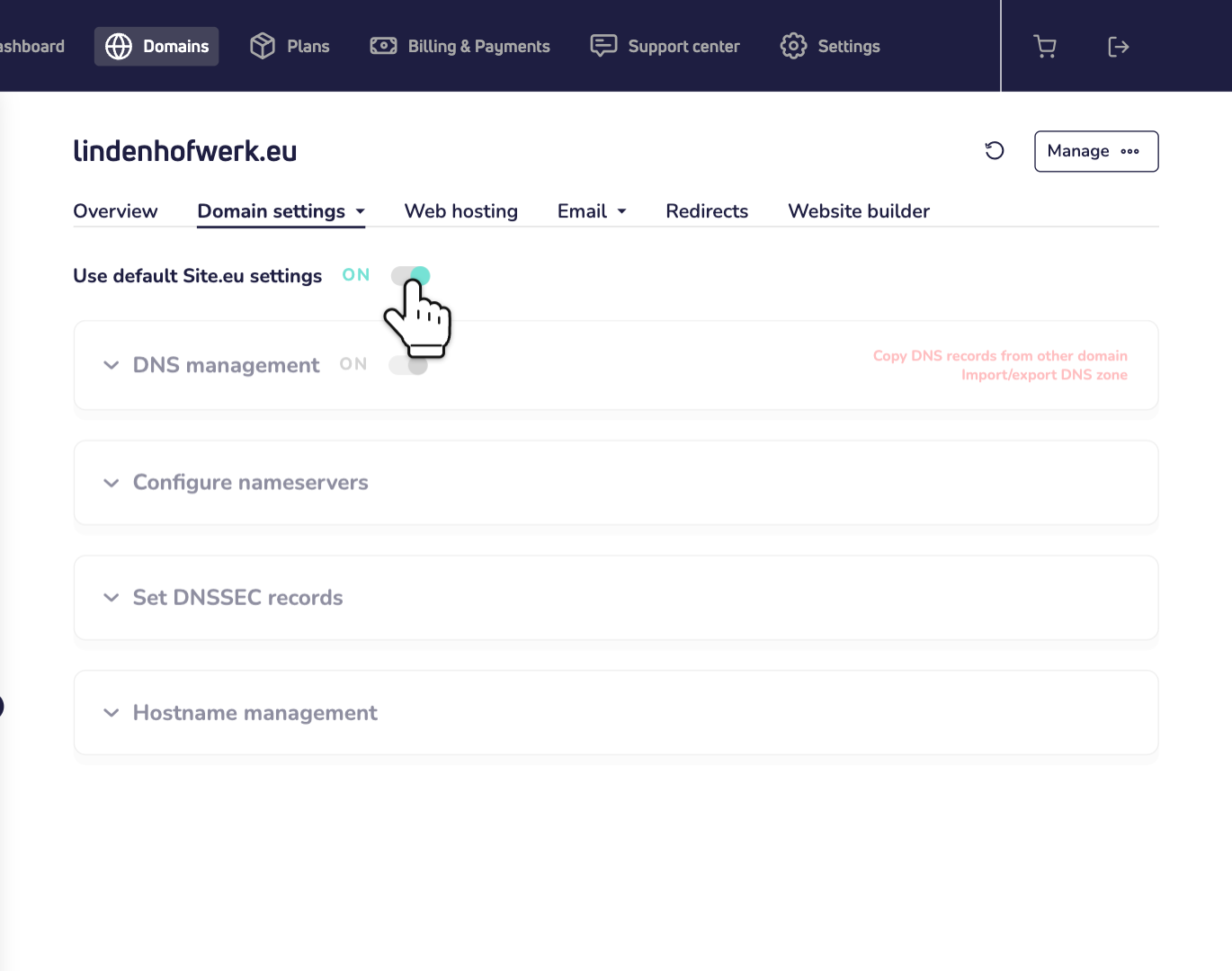
Step 2: Turn off Use default Site.eu settings. From now on, you manage all your DNS records yourself. Not sure? Read why our default settings work best for most people.
Step 3: Open DNS management. Fill in the empty row at the bottom: name, type, value and TTL. A new empty row appears for the next record. Done? Click Save DNS records.
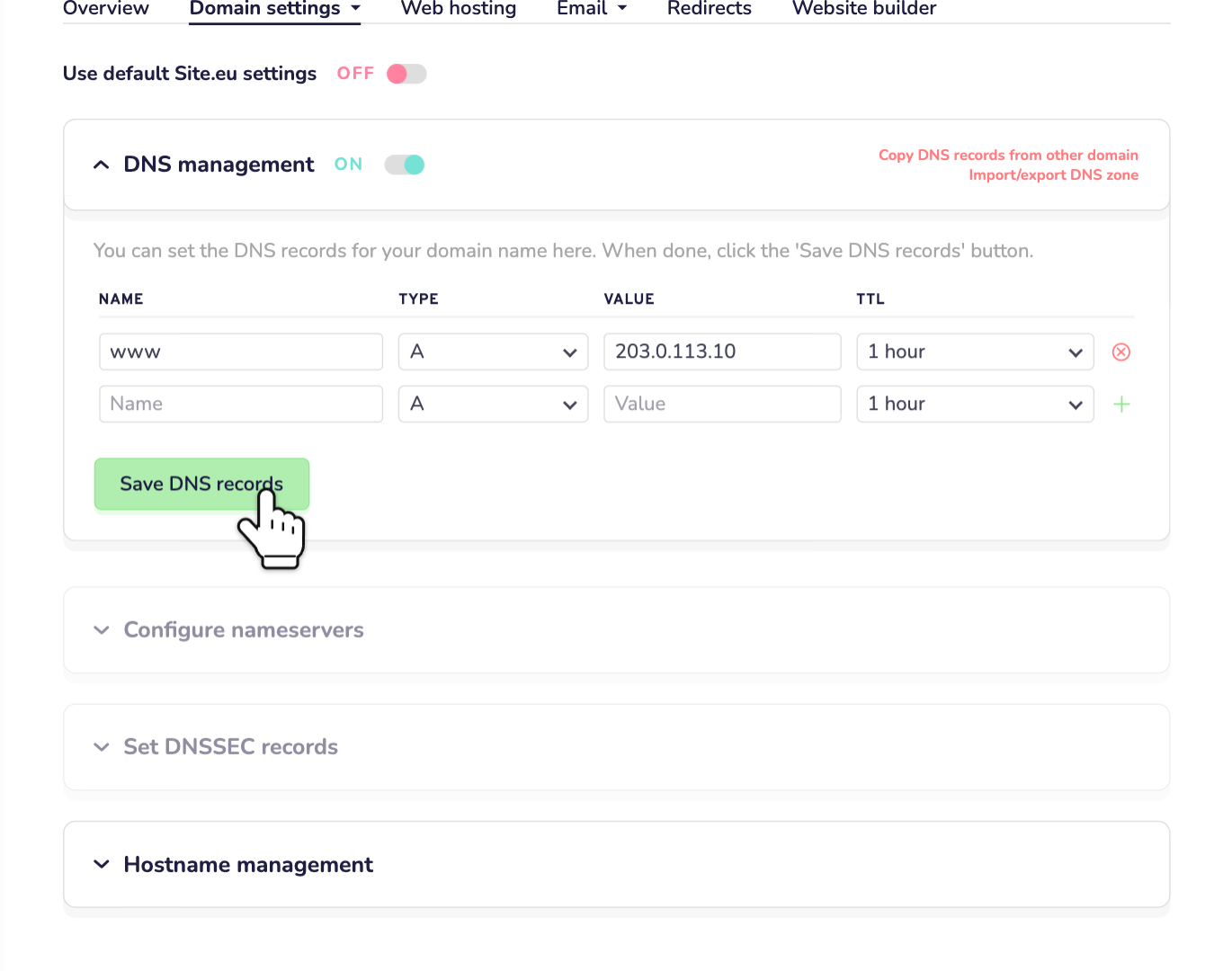
Remove a record with the red cross next to it. Nothing changes until you save.
Does your domain name use other nameservers than ours, for example those of another provider? Then DNS management is off, and you can't manage your DNS records here yet. Switch it on first. Those nameservers are then replaced by ours. Read more about linking your domain name to external DNS.
Made a mistake?
No worries. You can go back to an earlier version of your DNS records. Next to DNS management, open the menu View current DNS records. It lists your earlier versions by date and time. Pick the one from before things went wrong, check the records and click Save DNS records.
You only see this menu after you've changed your records at least once.
Handy extras
- Copy DNS records from other domain: use the records of another domain name in your account.
- Import/export DNS zone: move all your records in or out at once, as a zone file.
- Want our standard records back? Turn Use default Site.eu settings on again. We then manage your DNS records for you again.
Is your domain name registered somewhere else?
First add it as an external domain name. Its advanced settings then show the DNS records you need to create at your own provider.
Rather manage the DNS with us? Click Link domain to Site.eu nameservers first. Only then change the nameservers at your provider. Don't swap these steps: we only add your domain name to our nameservers after you click the button. Until then, your DNS doesn't work. Read how to change your nameservers.
See a notice about missing DNS records? Here's how to fix it. Want extra security for your DNS? Read what DNSSEC is and how it works.